Asian retailers turn POS systems into real-time marketing tools
QR payments and digital wallets push checkout systems beyond transactions.
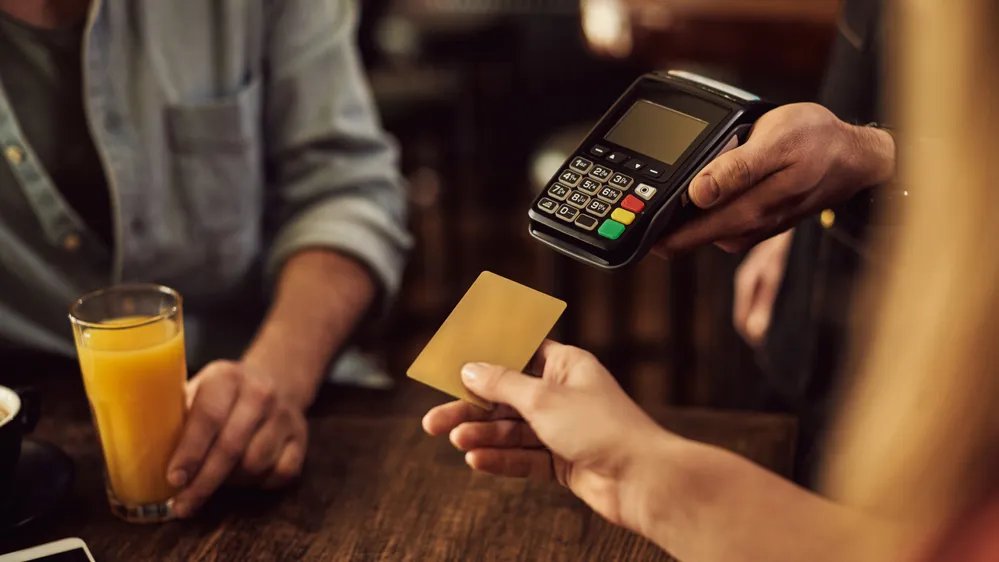
Asian retailers are increasingly using point-of-sale (POS) systems to deliver real-time promotions and personalised offers as digital payments accelerate across the region.
“Asia is becoming one of the most important laboratories for next-generation retail because of scale, digital readiness, and diversity,” Eugene Macey, a partner and head of digital practice at Simon-Kucher Elevate, told Retail Asia.
Macey said the region accounts for about 60% of the world’s population and 46% of global gross domestic product, with the middle class continuing to expand rapidly.
Against this backdrop, he said retailers are shifting POS systems away from basic payment processing towards broader “commerce enablement.”
“A modern POS system is no longer just a till; it is connected to inventory, loyalty, personalised offers, staff planning, replenishment, and digital channels,” he said in an emailed reply to questions.
Retailers are increasingly using checkout data to trigger personalised discounts and promotions in real time, he pointed out.
“Impulse purchases are becoming more data-driven and digitally triggered,” he added.
Sean Fu, senior vice president for Greater China at Global Payments, Inc., said the rapid rise of digital payments is accelerating this shift.
He noted that QR (quick-response)-based payments now account for more than 90% of daily transactions in China, embedding scan-to-pay behaviour into everyday retail activity.
Across Southeast Asia, Fu said digital wallet adoption is also expanding rapidly across age groups through government-backed digitalisation initiatives.
“The shift toward convenience, speed, and mobile-first payments—whether through QR, digital wallets or contactless cards—is a key force influencing both POS technology adoption and consumer behaviour across Asia,” Fu said in an emailed reply to questions.
Retailers are increasingly using checkout systems to deliver targeted promotions before transactions are completed, particularly in high-frequency categories such as groceries and food and beverage.
Fu noted that even small delays or friction at checkout could affect conversion rates.
Jaivinder Singh Gill, senior vice president for Asia-Pacific, Middle East, and Africa banking and retail at Diebold Nixdorf Inc., said retailers are turning POS systems into a broader decision-making tool as store operations become more complex.
He cited post-pandemic footfall recovery, fragmented loyalty programmes, and labour shortages as major pressures reshaping retail operations.
“The only moment a retailer truly owns is the transaction,” he said in an email. “Advanced POS systems make that moment count. The checkout moment is no longer a terminus; it has become a decision point.”
Gill said retailers are increasingly using real-time basket data to recommend add-on purchases before payment, increasing basket size without disrupting the customer experience.
‘Impulse purchase’
Traditional impulse buying drivers such as shelf placement are also being replaced by digital prompts tied to loyalty systems and mobile applications.
In the Philippines, Philippine Seven Corp. uses machine learning through its CLiQQ platform to generate personalised coupons redeemable at checkout.
In Australia, Coles Group Ltd. has deployed artificial intelligence (AI)-powered smart trolleys that let customers track spending and receive promotions whilst shopping.
Fu said similar systems are already being used in Hong Kong supermarkets and Taiwan pharmacies, where checkout systems suggest volume discounts and add-on products during transactions.
Gill added that retailers in China are integrating checkout systems with Tencent Holdings Ltd.’s WeChat mini-programmes to trigger personalised offers after products are scanned but before payment.
“The impulse purchase effect is strongest when three things align: relevance, timing, and friction removal,” he said.
Despite rapid adoption, the executives said POS modernisation remains uneven across Asia. Macey cited fragmented systems, legacy technology, and deployment costs as major barriers.
Fu cited cost constraints amongst smaller businesses, data quality problems, and organisational resistance to tech adoption.
Gill warned that POS systems heavily dependent on continuous cloud connectivity might struggle in some Southeast Asian markets with weaker infrastructure.
Over the next 12 months, they expect POS development to focus on AI-driven personalisation, biometric payments, digital wallets, smart carts, and tighter integration between online and physical retail systems.
Gill said the longer-term direction is unified commerce, where payments, loyalty programmes, promotions, inventory, and fulfilment are managed through a single real-time retail platform.



















 Read Here
 Advertise
 Sign Up