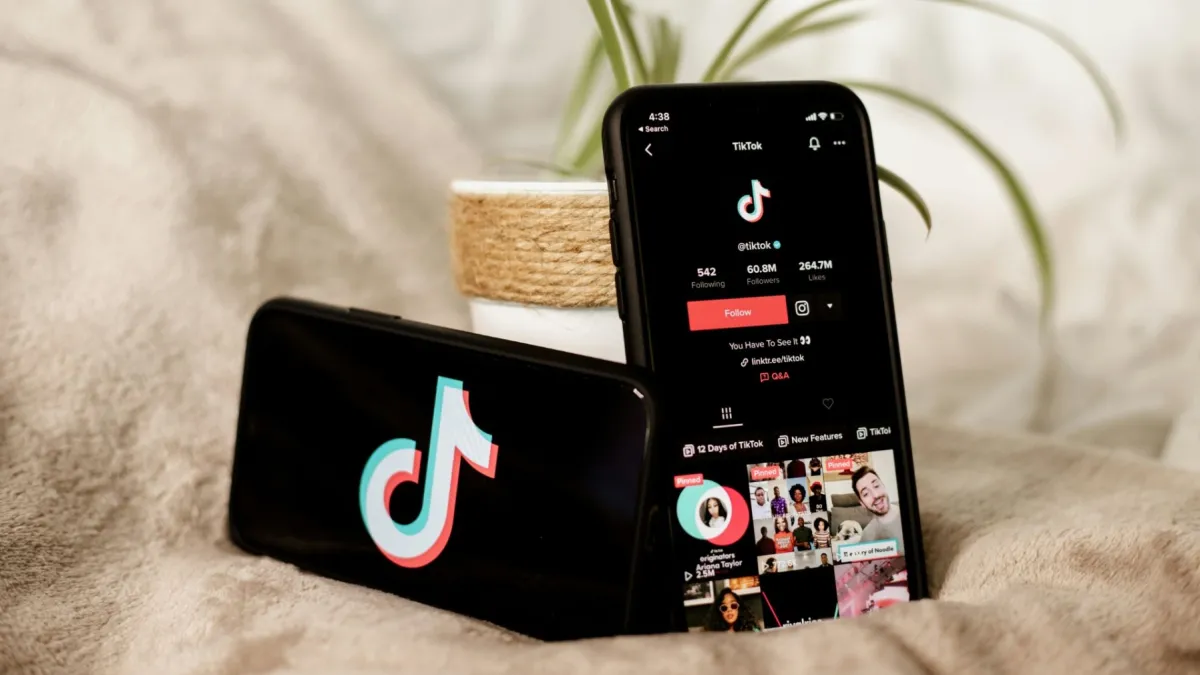
Beauty brands rethink sales as TikTok, Douyin power livestream shopping
Douyin overtook Tmall in China beauty e-commerce sales in 2025.
Beauty companies across the Asia-Pacific region are changing how they sell as TikTok and its Chinese counterpart Douyin reshape product discovery and online purchasing.
The shift is most visible in China, where Douyin overtook Tmall as the biggest beauty e-commerce platform, generating $39.8b (RMB270b) in 2025 versus Tmall’s $32.6b (RMB221b), Sherri He, a senior partner at Kearney, Inc., told Retail Asia.
Most of Douyin’s gains came at Tmall’s expense, whilst JD.com remained broadly stable, she pointed out.
Douyin operates on livestream commerce driven by influencers and regular content creators, a model centred on content-driven discovery rather than search-based shopping.
“As a social commerce platform, livestreams based on key opinion consumers and key opinion leaders played a key role,” He said
This has boosted local beauty brands such as Maogeping and Caitang, which account for about 35% of Douyin’s premium beauty sales versus 15% on Tmall, she added.
A typical premium brand sees a return on investment of 2.5 to 3 on Douyin compared with 5 to 6 on Tmall, with influencer costs weighing on returns, He said.
Brands are responding by increasing self-produced livestreams to more than half of content output, though influencer partnerships remain important in early-stage growth.
The platform impact is uneven across the Asia-Pacific region. In Hong Kong, where TikTok is not officially available, Xiaohongshu and Douyin fill the social commerce role, said Kathy Lee, executive director at Colliers Hong Kong.
In Southeast Asia, TikTok Shop has “shifted the retail paradigm from traditional product discovery to immediate, frictionless purchasing,” she told Retail Asia.
For global brands, adapting to content-led commerce has become essential for growth. Artificial intelligence (AI) is also influencing purchase decisions, but remains secondary in beauty.
Consumers in Asia and Australasia are more likely than the global average to act on AI recommendations at 43% versus 38%, said Ahmad Khan, a senior analyst at GlobalData Plc.
However, livestream influencers and social media personalities still lead at 49% and 53%, compared with 42% for AI. “The human face is still more important to consumers in this category than AI,” Khan said.
Raymond Tsui, managing director at Boston Consulting Group, said brands should first define TikTok’s role in their strategy.
"Beauty brands should first ask what role they want TikTok to play in their strategy, whether brand building, traffic generation, gross merchandise value (GMV) generation, or all, and what level of investment versus profitability they are willing to accept," he told Retail Asia.
Local brands have moved faster due to lower costs and agile execution, whilst multinational companies are still refining their approach, he said.




















 Read Here
 Advertise
 Sign Up