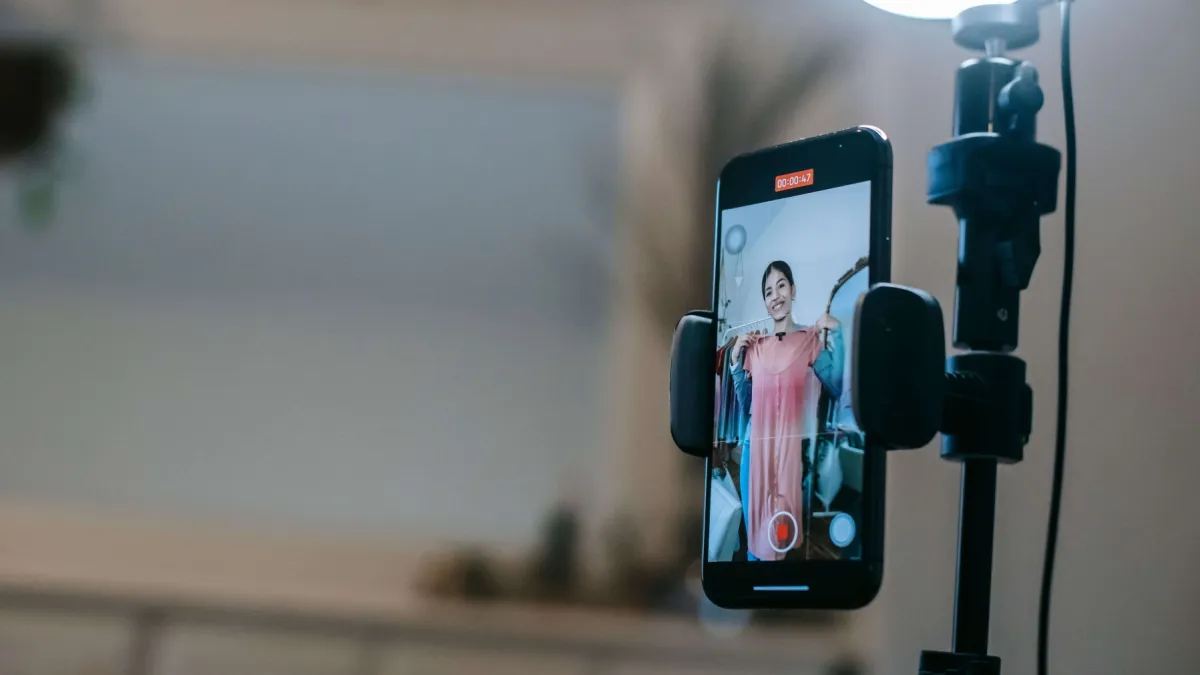
Livestream evolves from marketing gimmick to sales channel
Short-form video has become the main medium of product discovery.
Livestream shopping is becoming a core retail channel in Southeast Asia as brands invest in dedicated teams, creator partnerships, and technology to turn content into a long-term sales business rather than a marketing campaign.
“The biggest challenge today is not consumer awareness, but execution,” Derek Keswakaroon, a partner at Bain & Company, Inc., told Retail Asia.
“Livestream commerce has evolved from a marketing-led experiment into a distinct commerce channel with its own operating model and capabilities,” he added.
Success now depends on building capabilities across content production, creator partnerships, livestream operations, payment integration, and performance management, he said.
The shift reflects a broader change in consumer behaviour. Rather than searching online marketplaces for specific products, shoppers are increasingly discovering items through short-form videos and livestreams before deciding to buy.
“The most important change is the continued shift from search-led shopping to discovery-led shopping—and short-form video as the main medium of discovery,” Keswakaroon said in an emailed reply to questions.
Joanne Chen, founder of EzHub Global Pte. Ltd., said livestreaming became commercially viable once platforms integrated payments, checkout functions, and commissions for creators.
“So key opinion leaders started to earn commissions based on sales, instead of previously where it was just a one-off promotion thing,” she said via Zoom.
That transformed livestreaming from a branding exercise into a structured sales channel, encouraging brands to invest in it as a permanent revenue stream.
Momentum accelerated after ByteDance Ltd.'s TikTok introduced TikTok Shop in Southeast Asia.
“If you look at live commerce and how it took over, a very large role is played by TikTok,” said Weihan Chen, insights lead at Momentum Works Pte. Ltd.
She said the platform's integration of shoppable videos and livestreams allowed consumers to complete purchases without leaving the app, shortening the journey from product discovery to checkout.
Momentum Works Insights Manager Teng Ian Wong said content-led commerce is becoming a meaningful part of online retail.
Internal data showed livestream shopping generated about $18b in gross merchandise value in 2024, representing about 14% of platform sales.
Combined with video commerce, content-driven shopping accounted for 32% of platform sales in 2025, up from 20% a year earlier.
“The biggest challenge today is not consumer awareness, but execution,” Keswakaroon said.
Many companies still approach livestreaming as a marketing campaign instead of a business function, requiring investments in content creation, creator management, data analysis, and cross-functional coordination.
Artificial intelligence (AI) is also beginning to reshape the sector. Momentum Works’ Chen said AI-generated videos and livestreams could eventually complement human hosts.
EzHub’s Chen said brands are increasingly hiring livestream hosts, producers, and talent managers—roles that barely existed a few years ago—to support regular broadcasts.
She expects future systems to become more interactive and support virtual product demonstrations.
Keswakaroon expects livestreaming, short-form video, and conventional e-commerce to continue converging over the next three to five years.
“The channel is becoming less of a campaign activity and more of a long-term commercial capability,” he added.














 Read Here
 Advertise
 Sign Up