Asia‑Pacific airports rework strategies to lift retail sales
They are changing tenant mix and checkout systems to capture higher‑yield spending.
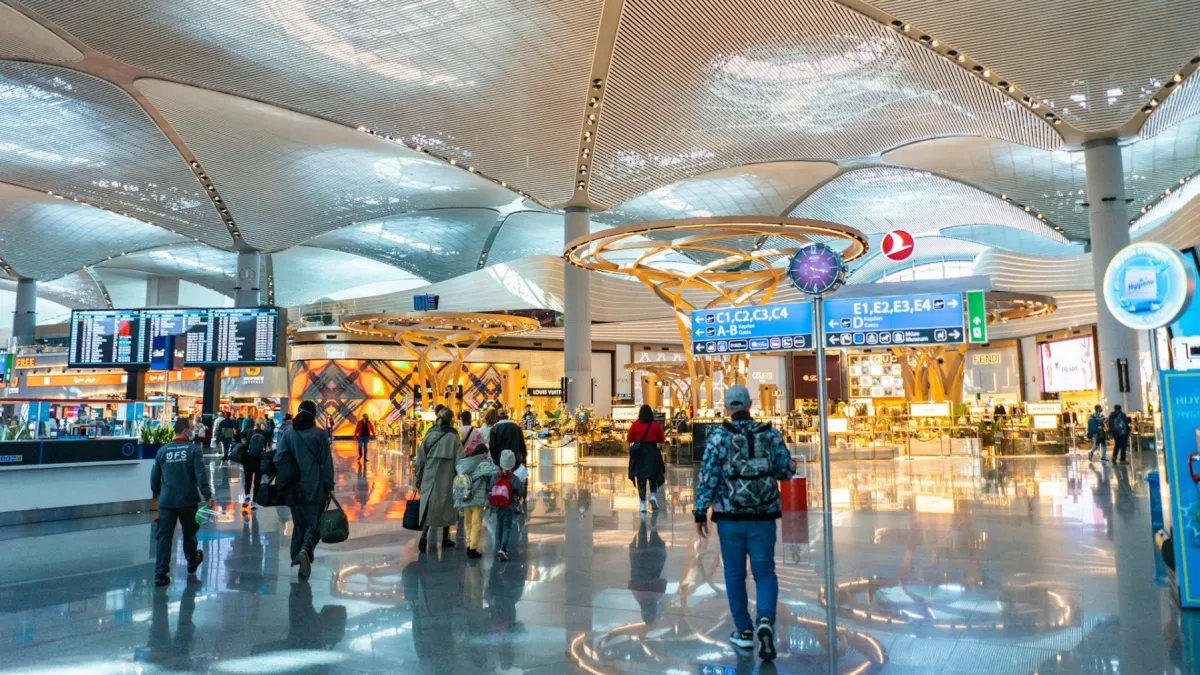
Rising passenger spending on luxury is prompting airports across the Asia‑Pacific region to rethink retail layouts and technology, as operators seek to lift spending per traveller amidst slower growth in traffic.
“Airports are no longer simply places for transactional shopping,” Sarah Branquinho, president of the Tax Free World Association (TFWA), told Retail Asia. “Passengers increasingly look to find something new and unique, and expect engaging, experience-led environments that enhance their journey.”
Passenger spending at Asia‑Pacific airports rose 13% from January to October 2025 compared with the same period in 2019, according to the Airports Council International Asia‑Pacific & Middle East, even as domestic traffic increased only 2%. The gap has sharpened airport focus on retail sales rather than passenger volume alone.
Luxury sales rose 9% and spending on local products climbed 7%, reflecting demand for higher-value purchases and destination-linked items. Leading sources of spending include travellers from China, India, the United Arab Emirates, and Saudi Arabia.
Airport operators are responding by changing tenant mix, store layouts and checkout systems to capture higher‑yield spending during the time passengers spend airside between security and boarding.
With a passenger base skewed toward Millennials and Gen Z who are digitally fluent and open to discovery, Asia-Pacific airports are “an ideal environment for experimentation that can later be scaled globally,” Branquinho said.
The region accounts for 42% of global duty-free and travel retail sales, she pointed out.
Millennials and Gen Z travellers form a large share of outbound traffic in markets such as China, India, and Southeast Asia, she said. That group typically researches purchases in advance, compares prices digitally and expects a consistent experience across channels.
Retailers have adjusted by moving away from standard duty-free formats. Hybrid layouts that combine retail, food, and beverage and seating areas have become more common in larger terminals, as have short-term brand installations designed to capture attention during dwell time.
Interactive engagement has practical value rather than marketing appeal, according to Emily Stella, a principal analyst at GlobalData Plc.
She said trial and discovery zones remain effective, particularly in categories such as fragrance and cosmetics that rely on testing and consultation.
Stella cited Guerlain SA’s flagship store at Incheon International Airport, where curated assortments and on-site consultation are used to differentiate itself from downtown stores.
“Live performances, entertainment activities, and pop-up events keep travellers engaged within retail zones, encouraging longer visits and higher spending,” Stella said in an emailed reply to questions.
Beauty and fragrance remain the biggest travel retail categories, accounting for about a third of global sales, according to TFWA.
Branquinho said the recovery period after a global COVID-19 pandemic has favoured more expensive goods, with travellers showing stronger interest in limited runs, airport-only packaging and products tied to place of origin.
Retailers are also targeting passengers with limited time in the terminal. Stella said click-and-collect services and airport apps let travellers complete purchases ahead of arrival, reducing lost sales linked to boarding schedules and congestion.
Digitally delivered promotions have expanded as well. Stella cited mobile vouchers and location-based offers used to steer footfall, though results depend heavily on airport design and the mix of transfer and origin passengers.
More diverse travellers
Branquinho said pre-trip browsing and reservations have become common, especially among frequent flyers. Whilst Chinese and Korean passengers have historically driven spending in liquor, skincare, and luxury goods, dependence on a narrow traveller segment has eased.
“As global travel patterns continue to rebalance and new outbound markets emerge, airports are seeing a broader mix of nationalities contributing to commercial performance,” she added.
The Asia-Pacific travel retail market is forecast to grow from $36.74b in 2025 to $39.54b this year, reaching $57.06b by 2031, according to a February report by Mordor Intelligence Pvt. Ltd.
Operational efficiency remains central to retail results. “Frictionless journeys, whether through mobile ordering, digital navigation, or streamlined checkout are becoming an important part of the airport retail environment,” Branquinho said.



















 Read Here
 Advertise
 Sign Up