Asia consumption nears $7t as strategies split
Diverging consumer behaviour across markets forces firms to rethink regional playbooks.
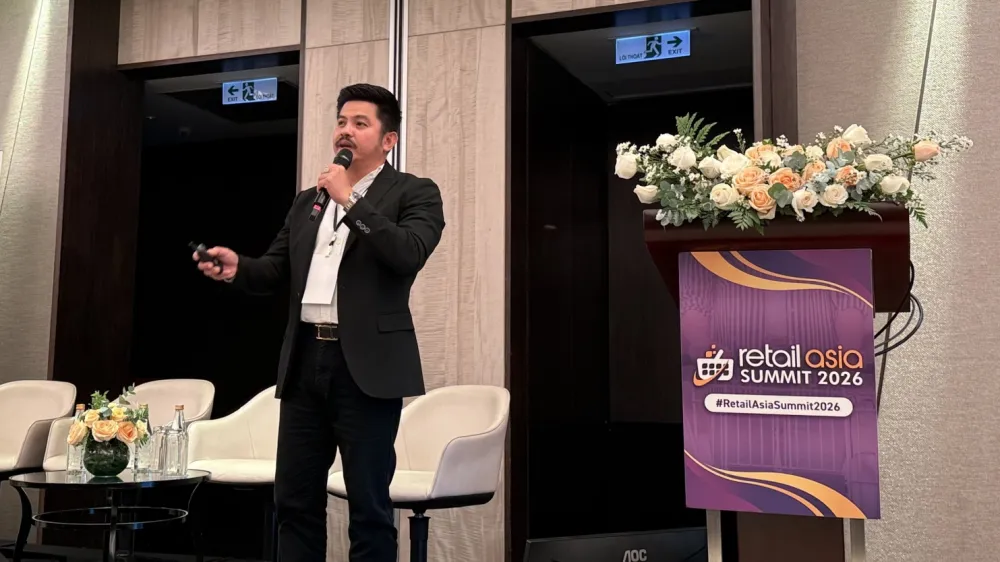
Asia’s private consumption is projected to reach nearly $7t, but widening gaps in sentiment and spending are forcing companies to rethink regional strategies. Scale-driven approaches are losing effectiveness as “diverging behaviour… is forcing firms to localise strategies,” said Hugo Texier, Partner at Roland Berger Southeast Asia.
Three forces are driving the shift: economic divergence, price-quality polarisation, and personal fragmentation. Consumer optimism varies sharply, from 81% in China to 18% in Japan and 25% in Hong Kong. In the Philippines, sentiment fell from 53% in 2024 to 35% in 2025 despite strong growth. “They are living different realities,” Texier said, highlighting how uneven confidence is reshaping demand.
Traditional expansion assumptions are also breaking down. Emerging markets are becoming more quality-focused, whilst developed markets are turning more price-sensitive. In Vietnam, 73% of consumers prioritise quality, compared to price sensitivity of 37% in Japan and 35% in Singapore. “If your strategy was built on these assumptions, then you are mispositioned in almost every market,” he said.
Consumer behaviour is also diverging structurally. Thailand is driven by self-expression, the Philippines by social anchors, and Singapore by security seekers. These are “structural differences, not just nuances,” Texier said, requiring tailored engagement strategies. Meanwhile, sustainability is losing ground in Japan, South Korea, Malaysia, and Indonesia, where it has “fallen roughly about 10%,” although Vietnam remains an outlier with 58% factoring it into decisions.
Spending patterns are splitting between essentials and luxury. Grocery is the only category set to grow across all markets, with 63% of Vietnamese and 73% of Indian and Malaysian consumers planning to increase spending. “The polarisation between essential and luxury consumption is not a problem to solve. It is a strategic architecture to build,” he said.
Luxury demand is weakening in mature markets. Over 70% of non-luxury consumers in Japan are unlikely to enter the segment, with more than 50% in South Korea and Hong Kong showing similar reluctance. In China, 36% of luxury buyers remain loyal. Success now depends on “exclusivity, craftsmanship and social distinction,” as companies balance value-led essentials with identity-driven luxury.



















 Read Here
 Advertise
 Sign Up






Commentary
Why APAC digital leaders must overhaul content amidst fractured consumer discovery
How EV buyers in Asia are rewriting consumer trust and retail competition
If the AI agent doesn't know your brand, neither does your next customer