Centralised supply chains reduce Vietnam retail stock-outs
Consolidated logistics, regular deliveries, and supplier alignment are critical to meeting customer demand.
Centralised supply chains are the backbone of reliable store deliveries and customer satisfaction in Vietnam’s retail sector, according to Mike Reid, chief supply officer of Central Retail Vietnam.
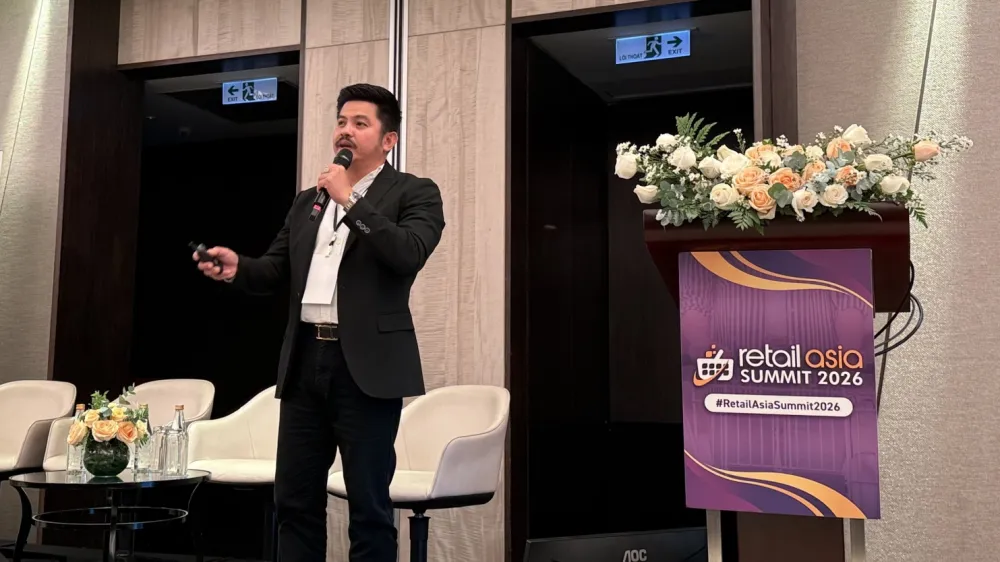
During a fireside chat at the Retail Asia Summit Vietnam 2026, Reid highlighted that centralised supply chains are key to reliable store deliveries, reducing stock-outs and ensuring products reach customers.
He added that effective supply chain management anchored on operational efficiency and centralisation will determine the success in the retail sector of Vietnam.
“I don’t need to invent anything new in the supply chain. Retail supply chains have been invented, they’ve been optimised, they’ve been made efficient, and centralisation works," he said. "It is the most efficient way to deliver a regular, reliable service to our stores."
Reid noted that one of the biggest hurdles in Vietnam when it comes to the supply chain is the mindset of suppliers with many still believing it is cheaper to deliver directly to dozens of store locations rather than a single distribution center.
“The challenge in Vietnam is the mindset to preserve the way things have been done in the past,” he said.
Isolated supply chains often focus on cost, with limited attention to customer needs. "I had one supplier who had four supply chain principles. They mention cost seven times and customer zero times," said Reid. "That to me is not a supply chain principle."
Reid provided practical examples of inefficiencies, including the handling of pallets.
Some suppliers deliver on modern palettes but refuse to exchange them at the delivery point, forcing workers to hand-ball cartons onto the recipient’s palette, he noted.
“Their palette works for their supply chain, but it doesn’t work for the end-to-end supply chain,” Reid said.
Similarly, minimum order quantities (MOQs) prevent regular deliveries, leaving smaller stores understocked.
“We have suppliers who might deliver to my smaller supermarkets once every month because they have an MOQ that is maybe 30 days’ sales,” he explained.
To address these challenges in regards to his company, Reid’s team uses data-driven dashboards to monitor stock levels and supplier service daily.
However, he stressed that having data is only part of the solution. “Our commercial team often focuses on sales and margin. Our store teams want stock. Supply chain sits at the heart of all of that. The best way to ensure regular, reliable deliveries is through a centralised platform,” he said.
Reid also highlighted the need to shift the supply chain culture from transactional to collaborative. Upon arriving in Vietnam, he observed adversarial relationships amongst more than 25 logistics providers, where parties often sought to assign blame for failures.
“It’s seldom one person’s fault when things go wrong. It’s the system, the process, something else at play. By identifying root causes and working together, we are building a modern professional supply chain,” Reid said.
His team reduced the network to six providers, offering longer-term contracts and fostering cooperation.
Education and professional development are also central to Reid’s approach. His company launched a supply chain academy in Vietnam, offering more than 30 training modules to develop local expertise.
“The supply chain has to grow faster than the retail market is developing," he said. "Sharing modern professional supply chain habits and techniques is something that needs to be done across all of Vietnam’s supply chain profession."
Reid also emphasised that supply chain execution must prioritise customer needs, especially during peak periods like Tet.
Almost all FMCG suppliers halt operations for nearly two weeks during the holiday, resulting in stock-outs despite preparation.
“Even building stock for three months before Tet, we see stock-outs more than double in that period when shoppers need their supply chain most. You have to build your supply chain strategy around the customer,” he said.
He concluded with a focus on teamwork and operational excellence.
“Execution beats strategy. You can’t strategise your way to success; you’ve got to execute that strategy," said Reid. "If you build your strategies around the customer and your supply chain strategy around your customer, you won’t go wrong."

















 Read Here
 Advertise
 Sign Up