FairPrice AI trolleys trigger 80% surge in shopper spend
Its flagship store has raised the average basket size from $19.64 to $35.36.
Singapore’s NTUC FairPrice Group is testing artificial intelligence (AI)-powered smart shopping trolleys at its Punggol “Store of Tomorrow,” part of a broader push to automate stores, raise spending per visit, and reduce pressure on staff.
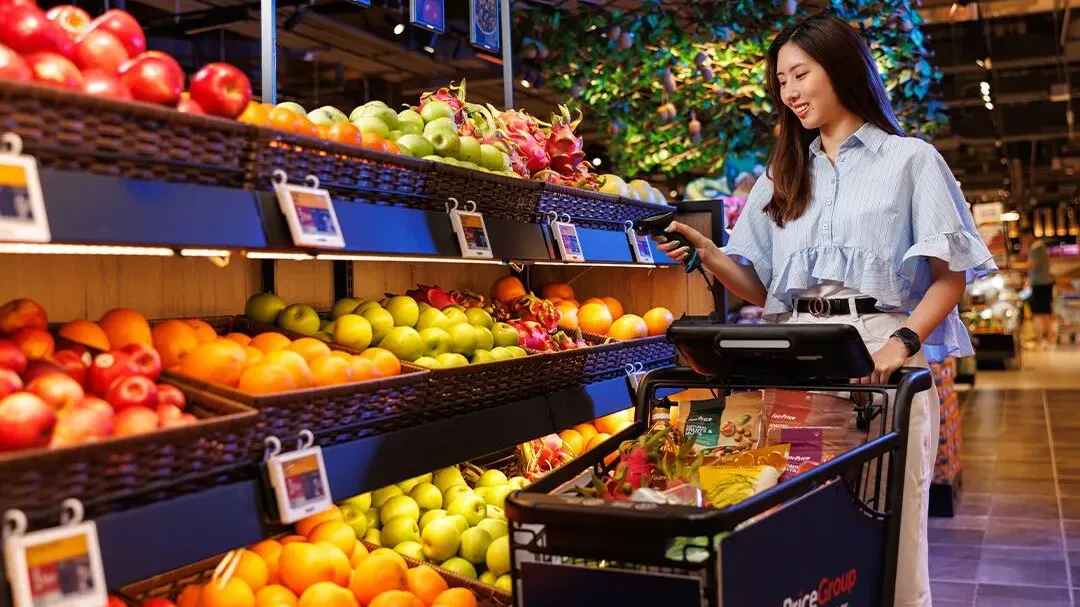
The smart trolleys come with built-in screens that help shoppers find items, show nearby promotions, and suggest products based on past purchases, Dennis Seah, FairPrice Group’s chief digital and technology officer, told Retail Asia.
“Our focus today with digital integration and adoption is innovation—how we can best leverage advanced technologies like Gen-AI to reinvent the customer and staff journey in our stores,” he said.
Customers can search for products on the screen, which then guides them to the right aisle. As shoppers move around the store, the trolley highlights nearby deals or related items.
Products are scanned automatically as they are placed in the cart, and payment is completed directly on the trolley. This removes the need to line up at checkout counters.
The trolleys use tablets, eight cameras, and in-store mapping to guide shoppers and handle checkout. Location-based offers appear in real time, whilst checkout happens automatically, cutting waiting times.
The trolley trial is part of FairPrice’s wider “Store of Tomorrow” program, which also includes digital price labels and AI-powered shelf monitoring.
Digital price cards let staff update prices and promotions remotely, reducing manual work and paper use. Once fully rolled out, the system will cover more than 160 FairPrice supermarkets, Seah said.
FairPrice is also linking Singapore’s MyInfo system to its checkout process. This allows discounts for Pioneer and Merdeka Generation members, as well as CHAS Blue and Orange cardholders, to be applied automatically when customers pay using the FairPrice Group app.
Vision AI technology is being used to monitor shelves and store conditions. The system flags low stock levels, alerts staff when aisles need cleaning, and signals when more checkout counters should open during busy periods. The tech uses existing CCTV cameras and video analysis.
Seah said the system is being tested at FairPrice Finest Sengkang Grand Mall.
The group has also been pushing customers toward digital platforms. In 2023, Kopitiam phased out physical loyalty cards and moved users to the FairPrice Group app, adding more than 400,000 digitally connected users in four months. Its supply chain centre now uses AI to analyse 60 million data points daily to predict disruptions and improve logistics.
Since opening, the Punggol flagship store has raised the average basket size by about 80%, from $19.64 (S$25) to $35.36 (S$45).
Still, Seah said scaling technology comes with challenges, including hiring skilled staff, integrating older systems, and shifting to a digital-first mindset.
To manage risks, FairPrice follows a “Prototype, Pilot, Scale” approach to test ideas before expanding them, he added.










 Read Here
 Advertise
 Sign Up