EY’s Olivier Gergele: Innovation advantage comes from scaling what resonates with consumers
He explores where the biggest value opportunities lie whilst emphasising the need to balance standardised scale with deliberate localisation across diverse markets.
The transformation seen in Asia’s retail sector over the past years has been evident, driven by rapid digital adoption and ever-changing consumer behaviours. Whilst developing countries continue to demonstrate strong growth amidst these circumstances, the more mature markets are experiencing more selective demands and shifting towards more personalised and data-driven value propositions.
With such contrasting conditions within the region, retailers are expected to navigate price sensitivity in mass markets and premiumisation at the top end, all whilst strengthening their supply chain agility and sustainability credibilities to remain competitive.
Against this backdrop, Olivier Gergele’s work closely aligns with the sector’s evolving needs. As EY-Parthenon Asean and Singapore Consumer Products & Retail Leader, he brings close to 30 years of sector experience, advising organisations globally on strategy, operating model optimisation, and end-to-end transformations that deliver sustainable impact.
Olivier’s strong industry background has also allowed him to lead initiatives on growth strategy, innovation, value creation, go-to-market transformation, sales and marketing effectiveness, profitability improvement, and large-scale transformation.
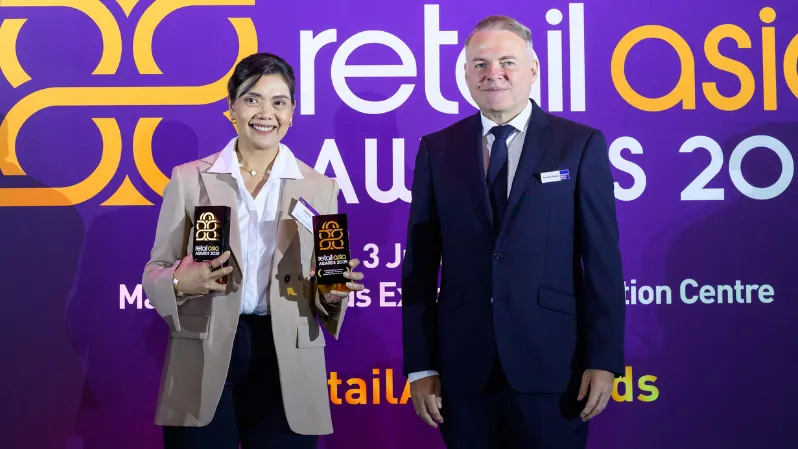
Speaking as a returning judge at the Retail Asia Awards 2026, Olivier discusses how consumer and retail companies can create value in Southeast Asia’s high-growth, high-complexity environment by combining digital innovation, localisation, and strong execution. He also touches on how retailers can drive enterprise-wide transformation, as well as the evolving role of consulting firms in delivering measurable commercial impact.
In today’s retail environment, where do you see the biggest value creation opportunities for Southeast Asian consumers and retail businesses?
The biggest value creation opportunities for consumer products and retail businesses in Southeast Asia (SEA) lie in the intersection of customer engagement, technology, and operational agility.
Social and live commerce are emerging as powerful growth engines. These platforms are shortening the discovery-to-purchase journey and turning engagement into immediate transactions through creator-led demand generation and shoppable content. The rise of “shoppertainment,” where brands and influencers host live product demonstrations and auctions, drives direct sales whilst strengthening community engagement and brand loyalty.
In SEA’s urban centres, consumers increasingly expect immediacy and convenience across all categories — be it groceries, essentials and impulse items. Retailers that can meet these quick commerce expectations can create new revenue pools by redefining how they price, stock, and deliver products.
Agentic artificial intelligence (AI) is transforming how consumers discover and transact. AI is moving beyond passive recommendations toward autonomous shopping agents that can research, evaluate and even complete purchases on behalf of consumers. This capability creates value by delivering personalised experiences at scale. As well, leading brands are responding with on-site AI solutions and selective partnerships not only to drive sales, but also protect market share.
Lastly, brands investing in regional sourcing, agile manufacturing, and digital supply chains can respond faster to volatility, launch innovations more quickly, and maintain higher in-stock rates. According to the September 2025 edition of the EY-Parthenon CEO Outlook, more than half (56%) of global retail-sector respondents have organised or are in the process of organising supply chains to better serve regional markets. Beyond risk mitigation, these capabilities enable more effective execution of localised assortments, giving brands a competitive advantage.
How should retailers adapt innovation strategies to diverse consumer behaviours across Southeast Asian markets?
SEA markets are diverse, with a wide range of cultures, consumer behaviours, and income levels. Deliberate localisation is important. For example, retailers should standardise core operational systems and capabilities across markets, whilst localising layers like product assortment, pack sizes, pricing, and brand messaging to fit cultural references, preferences, and occasions. This approach balances global efficiency with local relevance. Importantly, it avoids the pitfalls of over-localisation, which fragments scale, or under-localisation, which reduces relevance. AI can also help enable this at scale and consistently across markets.
In markets defined by uncertainty and diversity, rapid test-learn-scale cycles are essential. The innovation advantage comes less from making big bets and more from learning quickly and scaling what resonates with consumers.
Importantly, retailers should shift from product-led or category-led innovation to consumer journey-led innovation. By anchoring innovation around shopping occasions and “missions” (e.g., everyday top-ups, planned stock-ups, impulse treats or urgent purchases), they can resonate more effectively across cultures and income levels.
How do you assess whether a company’s go-to-market model is fit for Southeast Asia’s high-growth but high-complexity environment?
To succeed in SEA’s operating environment, a company’s go-to-market model must be integrated, intentional, and locally embedded.
Firstly, leading retailers are building “phygital” models that connect physical stores, mobile or web applications, delivery, and loyalty into one seamless system. This reduces friction across discovery, purchase and fulfilment, as well as addresses pain points such as inconsistent pricing, inventory mismatches, and disconnected loyalty experiences.
Second, a clear role-of-format design is critical. Winning retailers assign distinct “missions” to each format, from premium discovery to everyday convenience and value-led bulk buying. This strategy prevents internal competition and allows focused, fit-for-purpose execution.
Third, instead of a one-size-fits-all “modern vs traditional” approach, successful brands design strategies for each route-to-market stakeholder, from wholesalers to sub-distributors and direct outlets. They adapt incentives, execution, and support to fit local market realities.
Finally, partnerships amplify reach and speed. Plugging into local networks helps retailers enter markets faster, bridge capability or regulatory gaps, and embed themselves in consumer and channel ecosystems more effectively than standalone expansion.
What leadership capabilities are critical for successfully delivering enterprise-wide transformations in consumer and retail businesses?
Successful retail leaders anchor transformation and value creation in shopper insights and customer centricity, not just internal key performance indicators. Beyond strategy, they focus relentlessly on execution. These leaders actively remove complexity, such as reducing stock-keeping units, stopping low-impact initiatives, and simplifying processes, so that they can expand management bandwidth and frontline capacity.
In the area of workforce management, winning leaders foster an agile culture that favours experimentation, learning, and fast course correction over perfect plans. They also empower middle and frontline managers, such as store managers, sales leaders, and regional teams that are closest to customers, to make decisions. Without empowerment, transformation stalls at headquarters.
How do you see the role of consulting and advisory firms evolving in shaping the next wave of retail transformation in Southeast Asia?
Consulting and advisory firms are shifting from strategy design to end-to-end value delivery, staying involved until commercial outcomes like store economics, conversion, and margins improve.
As retail ecosystems become more fragmented, advisors are increasingly acting as integrators, helping retailers connect physical stores, marketplaces, social commerce, last-mile partners, and data platforms into a coherent operating model, as well as embedding AI into core commercial decisions such as pricing, assortment, promotions, and inventory. Today, the value of advisory also lies in translating global best practices into local execution, adapting merchandising, pricing, and formats to local consumer and channel realities.
In your capacity as a judge of this year’s Retail Asia Awards, how did you assess whether a retail initiative has delivered real business impact?
I will focus on four key dimensions when assessing the retail nominees: (1) commercial impact: initiatives should clearly drive revenue growth, margin resilience, cost efficiency or returns on investment; (2) growth potential beyond the core: initiatives that unlock value from underserved or overlooked segments, rather than delivering incremental gains from the same core customers; (3) scalability and execution: initiatives that move from proof-of-concept to full-scale delivery across markets or channels; and (4) sustainable impact: initiatives must be built to last, embedded in a fit-for-purpose operating model, rather than managed as a standalone project.





















 Read Here
 Advertise
 Sign Up