Retail, e-commerce to lead delivery drone market growth through 2031
Global delivery drone market projected to reach $7.65b by 2031.
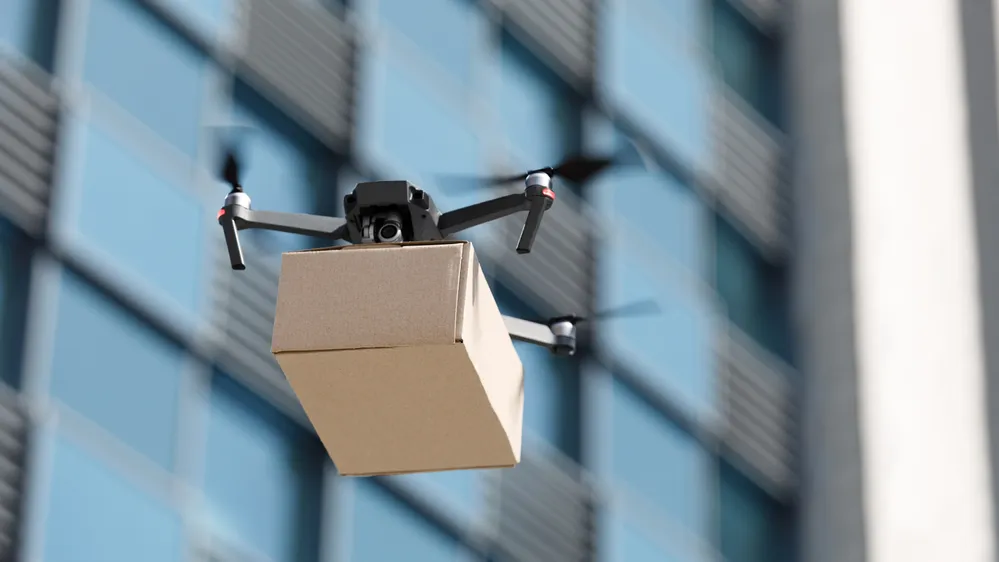
Retail and e-commerce will be the fastest-growing application for delivery drones through 2031 as online shopping continues to drive demand for faster and more flexible last-mile delivery services, according to MarketsandMarkets™.
The report said retailers and logistics providers are increasingly adopting drone delivery to reduce delivery times, improve operational efficiency, and expand service coverage in both densely populated urban centers and hard-to-reach locations.
As commercial drone delivery networks continue to expand and regulatory support improves, adoption across the retail and e-commerce industry is expected to accelerate steadily during the forecast period.
The growing role of e-commerce is also expected to support broader expansion of the global delivery drone market. MarketsandMarkets™ projects the market to grow from $2.88b in 2026 to $7.65b by 2031.
The report attributed the market's growth to the increasing demand for reliable and time-sensitive delivery services in both urban and remote areas.
With conventional road transport often hindered by traffic congestion and accessibility challenges, delivery drones are becoming an attractive alternative for businesses seeking to improve the speed and consistency of last-mile logistics.
Beyond retail, delivery drones are also seeing increased adoption in healthcare and logistics, supported by advancements in drone technology and government initiatives promoting commercial drone operations. Industry observers note that the sector is moving beyond pilot projects, with companies increasingly integrating drone delivery into long-term logistics strategies and scaling commercial operations.
Amongst drone categories, models with an operating range of 20 to 50 kilometers are projected to account for the largest market share during the forecast period.
The range is considered well-suited for parcel, food, and medical deliveries, offering sufficient coverage for most urban, suburban, and regional routes while maintaining operational efficiency and manageable operating costs.



















 Read Here
 Advertise
 Sign Up