Philippine retail falls behind regional peers as expansion outpaces efficiency
The country is falling behind regional competitors in operational productivity.
Whilst Philippine retail is expanding, industry leaders are finding that rapid store growth is outpacing the necessary investments in operational efficiency.
During a panel session at the Retail Asia Summit 2026 held at Shangri-la, Makati, retail executives noted that the industry still relies on outdated growth metrics—such as store expansion and sales—whilst falling behind regional competitors in operational productivity.
According to Louella Scott, general manager at Vogue Concepts, Inc., chair of Philippine Retailers Association NRCE and member of Filipina CEO Circle, there are roughly one million sari-sari stores across the country, compared with only about 7,000 stores combined from major convenience chains such as Alfamart and 7-Eleven.
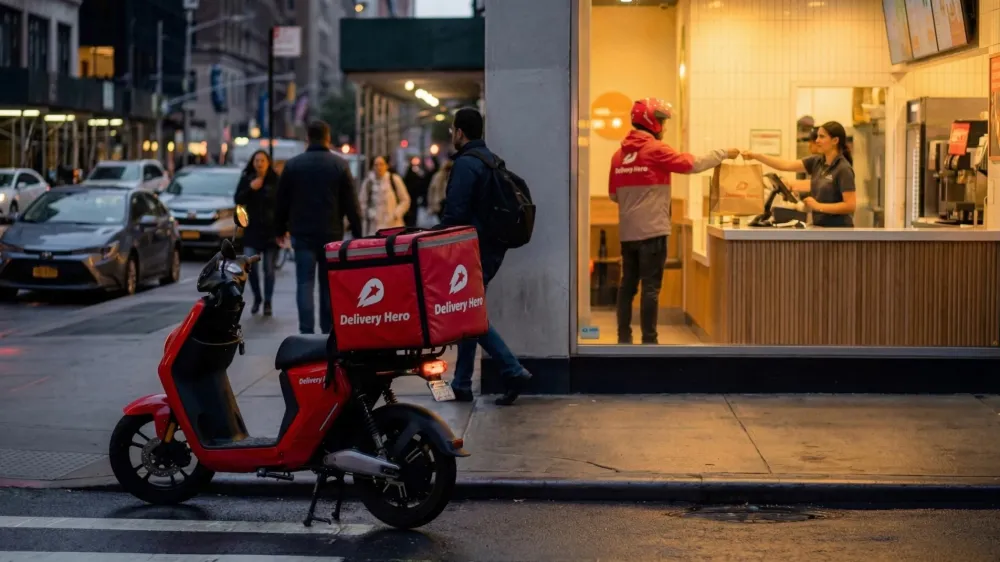
In line with this, one of the most significant structural challenges cited by panellists is logistics.
“Moving goods creates major cost pressures as logistics costs in the country consume around 27.5% of gross domestic product (GDP),” Jason Ocampo, AVP for technology at National Book Store Group, said.
He added that the figure is dramatically higher than neighbouring economies such as Thailand and Indonesia, where logistics costs account for only about 11% and 14% of GDP, respectively.
These costs are compounded by infrastructure challenges and traffic congestion, which further complicate distribution and supply chain management.
Beyond logistics costs, the panellists also pointed to internal operational inefficiencies that continue to slow productivity improvements.
“As compared with our ASEAN peers, many local retailers are still operating with fragmented legacy systems,” Ocampo explained. “Inventory data, procurement labs, logistics tracking—they don’t talk to each other.”
Without fully integrated systems, retailers often rely on manual interventions to manage stock levels or coordinate deliveries. In many cases, companies maintain higher safety stock levels simply to compensate for limited visibility across their supply chains.
This approach helps prevent stockouts, but it also raises operational costs.
Connectivity issues also remain uneven across store networks. “We need to be very connected all the time,” Scott said. “But the system—the internet, centralised systems, cloud POS—it’s not always good. Not all our stores are connected evenly.”
Despite these challenges, investments in automation and logistics upgrades often come later than expansion initiatives.
As a result, when Filipino executives compare their operations with those of international retailers, the difference can be stark.
Mark Uy, group head of strategy and business development at Ayala Corporation, said that one factor that may accelerate productivity improvements is the tightening labour market, yet retailers are finding it harder to recruit and retain talent.
He said that executives may view this as a challenge—but also as a potential catalyst for modernisation.
“In response, retailers may need to make jobs more meaningful whilst investing in technology that allows employees to focus on higher-value work,” Uy added.
In highly automated warehouses abroad, for example, Uy said robots handle heavy lifting whilst workers oversee operations or manage systems.
“That doesn’t mean people lose their jobs,” the executive said. “People transition from being cargo handlers to operating robots.”
Despite the challenges, the panellists remain optimistic that technology could help the Philippines close its productivity gap more quickly than expected.
Advances in artificial intelligence, digital platforms, and connectivity could allow retailers to bypass several intermediate stages of development.
“We may be decades behind,” Uy said. “But because of technology, that decade behind can be made up in a year.”
Still, the broader shift will require a change in mindset. Instead, the panellists said the industry must also ask harder questions about operational efficiency, supply chain integration, and return on investment.
“Boards should not just ask how many stores you opened,” Ocampo said. “They should ask what the return on investment is for that store.”
















 Read Here
 Advertise
 Sign Up