Indian retailers go hyperlocal as citywide expansion loses ground
They use micro-market data to rethink where stores open.
Retailers in India are shifting from broad city expansion plans to neighbourhood-level targeting as store economics and consumer demand become more fragmented.
“Bharat—the non-metro heartland spanning Tier 2-4 cities—is now the growth engine,” Archana Gupta, executive director and head of market strategy and understanding and shopper insights at Ipsos SA., told Retail Asia.
She said smaller cities now account for more than 45% of e-commerce orders as India’s retail market moves toward a projected $2t valuation by 2032.
Consumption patterns are also diverging. Luxury spending is rising by 12% to 14%, whilst value-focused retailers such as Avenue Supermarts Ltd. continue to post strong growth, Gupta said.
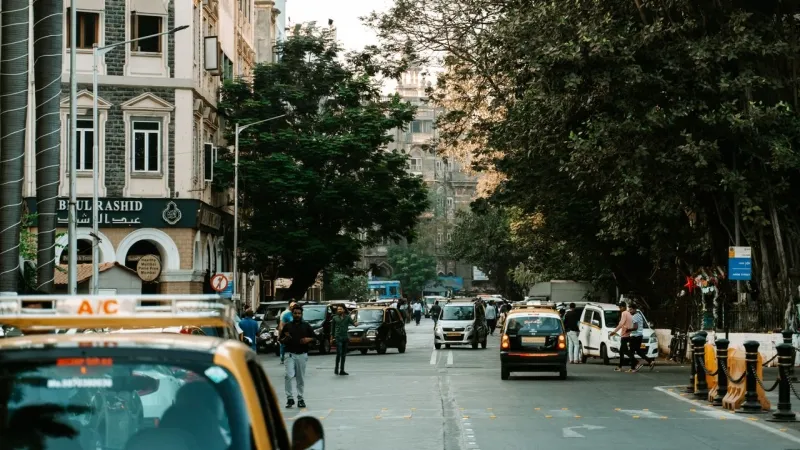
Retail planning has become far more granular. “Planning has shifted from city strategies to micro-markets—distinct neighbourhood pockets with unique demand and price sensitivity,” she said in an emailed reply to questions, adding that Mumbai alone has more than 200 such zones.
Retailers are increasingly analysing catchment areas within 500 metres to 1.5 kilometres, studying commuter flows, population shifts, and nearby competition before approving sites.
“DMart reportedly rejects 70–80% of sites on walkability, parking, and rent math,” Gupta said.
Technology and location intelligence are now key to expansion strategies. Gupta said retailers are using geographic information system mapping, telecommunication mobility data, and digital payment trends to identify demand gaps.
She pointed to neighbourhoods with strong delivery demand from platforms such as Swiggy Ltd. and Zepto Ltd. but limited organised retail presence as examples of untapped opportunities.
Retailers using advanced location analysis are reporting 15% to 20% higher store success rates compared with traditional methods, she added.
Rami Kaushal, managing director for consulting and valuation services in India, the Middle East, and Africa at CBRE Group, Inc., said retailers are increasingly relying on neighbourhood-level data instead of citywide assumptions.
“To guide their expansion beyond broad city-tier strategies, Indian retailers are leveraging granular hyperlocal analytics, geospatial intelligence, and digital footprints at the neighbourhood and PIN (personal identification number)-code level,” he said in an email.
Retailers are also tailoring product assortments more aggressively to local demand.
Gupta said southern markets tend to favour rice and filter coffee, whilst northern markets lean toward wheat, dairy, and tea.
Affluent urban districts buy more imported and organic products, whilst migrant-heavy areas often demand region-specific goods.
Misjudging micro-locations remains a major risk.
Gupta estimated that 20% to 25% of stores miss first-year targets because of issues such as poor visibility, limited parking access, or being positioned on the wrong side of the street.
“Precision will beat proliferation,” Gupta said, adding that retailers are increasingly treating stores as part of broader omnichannel networks rather than standalone outlets.



















 Read Here
 Advertise
 Sign Up