Automation shifts frontline roles towards customer-facing work
Rostering, inventory management, and self-service are being automated.
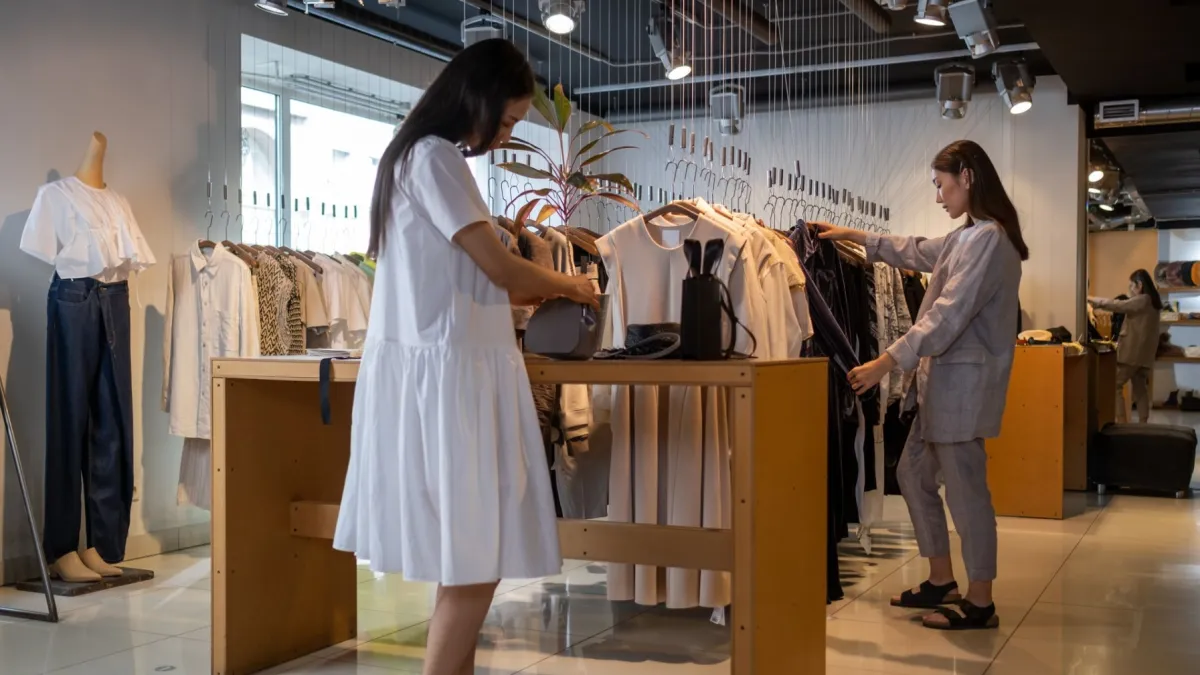
Retailers are redesigning frontline roles as technology takes on repetitive and low-value tasks, giving staff more time to focus on customers, industry leaders told the Retail Asia Summit 2026 in Singapore.
ASICS Asia Regional Director – DTC & Omni-Channel Andros Tiong said retailers need to clearly separate tasks that automation can handle from those that require frontline staff.
"When we actually introduce automation as part of support, the brand itself, the company itself, needs to be very clear, like, what are all the low-value work?" he said.
Data-driven tasks that can be generated automatically should be handled by technology, whilst employees should focus on customers, Tiong said.
"What we are trying to do is not to replace the employees," he said. "What we are trying to do is, we are going to give you all the ammunition to face the customers, have the knowledge."
He said frontline employees traditionally handle a wide range of responsibilities, from serving customers and checking inventory to managing stockrooms, scanning QR codes and conducting stock takes.
With automation, retailers need to give staff clearer objectives and let technology take on tasks that can be automated, Tiong added.
At Cheers, General Manager Karen Ong said the company is also reconsidering frontline job scopes as technology changes how convenience is delivered. "I think convenience itself is being redefined as we speak with e-commerce and live streaming platforms such as TikTok," she said.
Ong said the company is working on an exercise to ‘completely redefine the job scopes’ of frontline staff and redesign the structure of convenience-store operations.
"We are now doing an exercise together with the team to redesign the entire frontline structure of the convenience store," she said.
The objective is to use technology to remove repetitive work so employees can focus on higher-value activities. "Remove the low-value work, remove the repetitive work so that they can, you know, bring better value to their jobs," Ong said.
She added that the company is looking at how technology can extend operating hours without increasing manpower costs. "To think that technology will now replace people, I don't think that will ever be 100% true," Ong said, adding that retail remains a people business and employees need to be trained to use technology to deliver better service.
At IRVINS, Senior Vice President – Commercial Reno Chow said the company first audits its operations to identify where technology can address its biggest operational challenges. "It's not about getting a technology to hopefully, one day can actually resolve the issue," he said. "First we should make an audit on that."
The snack retailer has used technology to address staff rostering and inventory management, which Chow said can take up significant operational time across its stores.
“The aim is to let staff spend more time on activities such as improving stores, visual merchandising, service and planning for individual stores,” he said.
Chow said IRVINS maps technology to the customer journey rather than adopting it for its own sake. At its Terminal 4 store, the company has introduced a hybrid unmanned store concept that allows the outlet to stay open during night hours.
The setup uses an artificial intelligence (AI) agent trained on company information, brand history, FAQs and other content, which can answer questions in more than 40 languages.
RFID tags are then attached to products, whilst AI cameras check whether items taken from shelves match what customers pay for at self-service kiosks.
Mário Braz de Matos, founder of Flying Fish Lab, cautioned that retail technology can accelerate growth but also erode margins when competitors replicate the same capabilities.
"Tech accelerates the competition," he said. "It just made the race to the bottom go faster and faster and faster. But strategy is needed to give the business a stronger basis for beating and going beyond the best practices."
He cited China's near-instant retail market, where delivery can take roughly 26 to 28 minutes, with technology reducing average delivery times by 21%. Once a company achieves such an improvement, competitors can quickly follow, turning a differentiator into a basic expectation.
Growth does not necessarily translate into healthier economics, de Matos noted, citing an example in China where revenue rose 12% in June 2025 whilst selling and marketing costs increased 52%.
Discounts and subsidies can encourage consumers to try or switch platforms, but do not necessarily create lasting preference once the incentives disappear.
“Retailers therefore need a compelling difference that gives customers a reason to return, beyond brilliant basics such as availability, reliability, speed and fulfilment,” he said. "These are the tickets to be in the game," he added.











 Read Here
 Advertise
 Sign Up