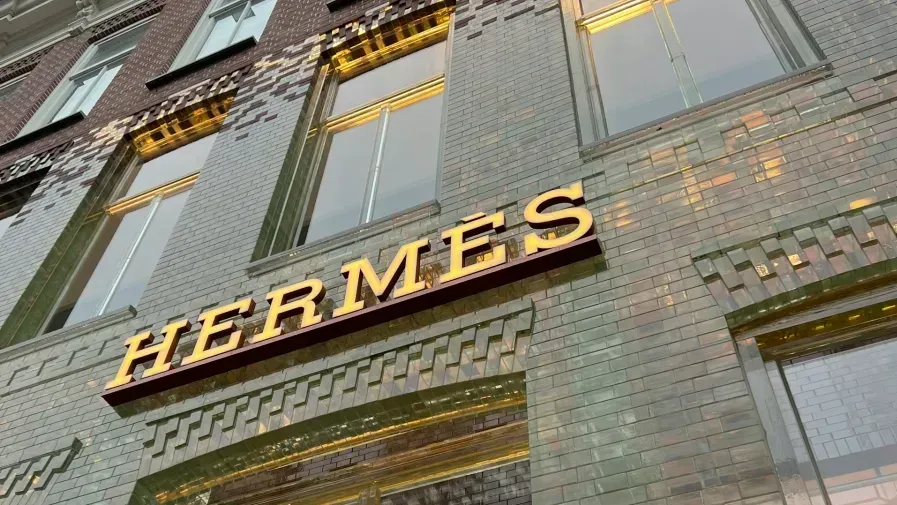
Hermès Japan sales lead regional growth as revenue reaches $13.80b
Japan sales increased 11%, recording the strongest growth amongst the reported regions.
Hermès reported revenue of $13.80b (€12.3b) in the first nine months of 2026, driven by growth in the Americas, Japan, and Europe excluding France.
Third-quarter revenue reached $4.60b (€4.1b), up 4% at constant exchange rates and 6% at current exchange rates. Sales were in line with the second quarter, with all regions growing except the Middle East.
Japan recorded the strongest growth amongst the reported regions, with sales rising 11% as local customers continued to support demand. Hermès opened a new store in Osaka in May and another in Nagoya in June.
Asia excluding Japan grew 2%, supported by South Korea, whilst sales in Greater China were stable.
The company opened a store in Beijing's Sanlitun district in April and renovated and expanded locations in Hong Kong and Taipei. Its stores in Kaohsiung and Chengdu also reopened after renovations in August and September, respectively.
By business segment, Leather Goods and Saddlery revenue rose 10%, Silk and Textiles grew 7%, and other sectors, including jewellery and home products, increased 3%. Ready-to-wear and Accessories revenue rose 1%. Perfume and Beauty revenue fell 1%, whilst Watches declined 2%.
Hermès opened its 25th leather goods workshop in Loupes, France, in April. It plans to open three more workshops in France by 2027, 2028, and 2030.
“Despite a complex environment, Hermès continues its profitable growth and maintains its course,” said Axel Dumas, executive chairman of Hermès. “Convinced of the strength and relevance of our artisanal model, we see our vision as firmly rooted in the long term, and we look to the future with confidence.”
The company also continued environmental initiatives focused on soil and freshwater and retained its AA rating from MSCI in August.
Looking ahead, Hermès maintained its medium-term objective of ambitious revenue growth at constant exchange rates despite global economic, geopolitical, and monetary uncertainties.
The group cited its integrated artisanal model, balanced distribution network, product creativity, and customer loyalty as foundations for its long-term strategy.















 Read Here
 Advertise
 Sign Up