Australian retail spending rises 6.1% in July, inflation tempers gains
Underlying inflation reached 3.6% as household consumption faces a flat outlook.
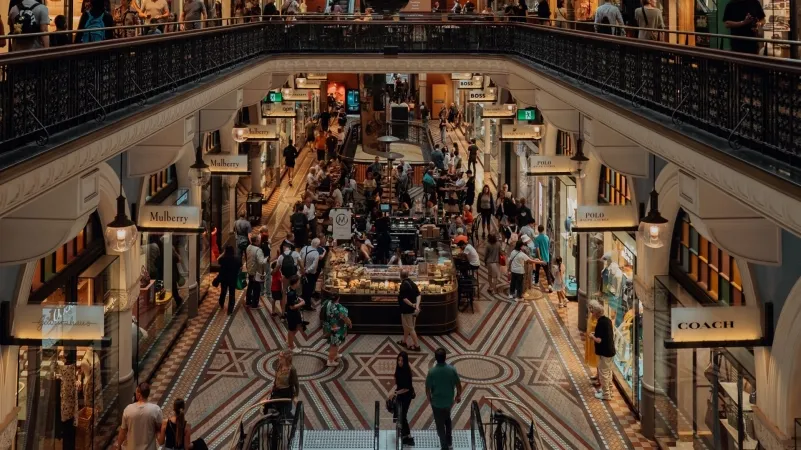
Australian retail spending reached $28.87b (AU$40.13b) in July, up 6.1% from a year earlier, but inflation left real retail growth modest as households remained cautious over discretionary purchases.
Annual growth strengthened from 4.7% in June, according to Australian Retail Council (ARC) analysis of Australian Bureau of Statistics Household Spending Indicator data.
The strongest increases came from cafes, restaurants and takeaway food services, which rose 8.2%, followed by other retailing at 7.9% and clothing, footwear, and personal accessories at 6.6%.
“Growth of 6.1% is broadly around what we have seen historically in nominal terms rather than an exceptional result,” said Glenn Fahey, Chief Economist at ARC.
Headline inflation stood at 3.5% and underlying inflation at 3.6%, limiting the increase in spending once price rises are taken into account.
“Once inflation is taken into account, real retail growth remains fairly modest,” Fahey said.
ARC cited forecasts from Deloitte Access Economics, which expects household consumption growth to remain flat over the next year.
Fahey said retailers face pressure from inflation across their supply chains as consumers focus on value and limit discretionary spending.
The latest Deloitte Retail Report found that 34% of consumers plan to restrict spending during the holiday season, whilst 32% intend to switch to cheaper options and 11% expect to delay purchases.
By industry, food retailing reached $11.29b (AU$15.7b) in July, up 5% from a year earlier. Household goods retailing rose 5.5% to $4.75b (AU$6.6b), whilst department stores and large online retailers increased 4.4% to $1.22b (AU$1.7b).
Cafes, restaurants and takeaway food services recorded $4.32b (AU$6b) in spending, up 8.2%.
Spending increased across all states and territories. The Northern Territory recorded the strongest growth at 10.2%, followed by Western Australia at 8%.
The Australian Capital Territory recorded the lowest growth at 5%, followed by New South Wales at 5.2%.
(US$1 = AU$1.39)















 Read Here
 Advertise
 Sign Up