What it takes to move AI from experimentation to business impact in retail
Retailers are no longer asking whether they should adopt AI. The harder question is how to turn AI experimentation into measurable business impact.
That shift exposes a challenge that technology alone cannot solve. AI can make an individual task faster, but meaningful transformation requires businesses to rethink how information flows, how work gets done, and how employees across headquarters and the frontline turn insights into action.
As enterprise software and technology company Lark sees it, the next phase is not simply about adding more AI tools. It is about giving AI the context it needs to understand how the business operates and embedding it into the workflows where people make decisions and get work done. By bringing communication, knowledge, data, and workflows into one connected workspace, businesses can move beyond individual AI productivity towards broader operational and business impact.
Build the foundation for AI to work
For AI to deliver meaningful value across an organisation, it needs context. Yet in many organisations, communication, knowledge, data, and workflows remain scattered across different tools and teams, making it difficult for AI to understand the bigger picture behind the work.
ZUS Coffee has seen the difference a more connected foundation can make. The retailer originally adopted Lark to bring work that had been spread across different platforms into a more connected workspace. Over time, it also built an extensive internal knowledge base in Lark Wiki, capturing organisational knowledge within the same ecosystem.
That foundation is now becoming increasingly relevant as the company explores AI. Eddie Goh, ZUS Coffee's Regional Head of Innovation, shared how Lark's AI capabilities can draw on enterprise context, from organisational knowledge and past decisions to the people involved in different projects.
For example, an AI agent can identify the right stakeholders for a meeting, check their availability, and surface relevant documents and past decisions. ZUS Coffee is also exploring how AI can analyse signals from everyday work, such as discussions around late deliveries or stock availability, to identify recurring operational challenges.
At MYDIN, Sir Malik Murad Ali similarly highlighted the importance of breaking down barriers between functions, noting how Lark has helped bring teams across finance, HR, supply chain, and operations into shared conversations.
But connecting people and information is only part of the foundation. Businesses also need to ensure that the data and processes behind their use cases are ready.
As Dr Farouk Abdullah, Founder and CEO of HJIB Solutions, highlighted during the discussion, many existing business processes were designed with human participation in mind. Introducing AI may therefore require organisations to rethink how information is collected and structured, as well as how work moves between people, systems, and departments.
Adding AI to an inefficient process may make an individual task faster without addressing the larger issue. Redesigning the process around what AI can do creates a broader opportunity: not only to improve efficiency, but also to surface insights, identify problems earlier, and enable people to do things that may not have been practical before.
Explore how retailers are using Lark to transform operations here.
Put innovation in the hands of the people closest to the problem
Building the right foundation is only part of the challenge. Businesses also need to make sure the people closest to the work can participate in the transformation.
In retail, that includes area teams, store managers, and frontline employees who see first-hand where information gets lost, processes slow down, or repetitive work gets in the way.
As myNEWS Chief Technology Officer Alex P'ng highlighted during the discussion, the people who own these workflows are often best placed to understand what needs to change. Rather than relying on IT to build every solution, his view is that IT should provide the infrastructure whilst teams take greater ownership of improving their own workflows.
This points to a broader opportunity for AI transformation: democratising not only access to technology but also the ability to innovate with it.
Making this possible at scale also means making these capabilities accessible to more people across the organisation. A mobile-native workspace can bring HQ and frontline teams into the same flow of work, whilst no-code tools such as Lark Base give employees without technical backgrounds a practical way to turn their understanding of day-to-day operations into better workflows, with automation and AI introduced where they can create value.
When the people closest to a problem can help shape the solution, transformation becomes less of a top-down technology rollout and more of a continuous process of improvement from within the business.
Start small, measure what works, and build from there
Retail leaders also highlighted the value of starting with clearly defined, manageable use cases. Functions such as accounts payable and receivable, HR, and other repetitive processes can provide opportunities to test AI and automation before scaling more broadly.
Rather than starting with the technology, teams can begin with one specific workflow or problem, test whether AI genuinely improves it, and refine from there. A successful pilot can reveal gaps in data and processes, build practical experience, and provide a clearer understanding of where AI can deliver value elsewhere in the organisation.
As these projects prove their value, what works can be scaled to other teams and processes. The measure of progress then shifts from whether employees are using AI to whether it is helping the organisation make better decisions, execute more effectively, or create capabilities it did not have before.
From AI productivity to business impact
Ultimately, the bigger shift is from thinking about AI primarily as an individual productivity tool to making it part of how the business operates.
Making that shift requires people, knowledge, data, and workflows to be connected, giving AI the context it needs to contribute meaningfully to the work. It also means redesigning processes around what AI makes possible and giving employees across headquarters and the frontline the ability to improve how work gets done.
This is how AI moves beyond standalone productivity: contributing not only to faster tasks, but to better decisions, stronger execution, and measurable business impact.
These insights were highlighted during the Lark Retail Leaders Luncheon, featuring Eddie Goh, ZUS Coffee's Regional Head of Innovation; Sir Malik Murad Ali, Director of IT, Digital, HR, Loss Prevention and Security at MYDIN; Dr Farouk Abdullah, Founder and CEO of HJIB Solutions; and Alex P'ng, Chief Technology Officer at myNEWS.
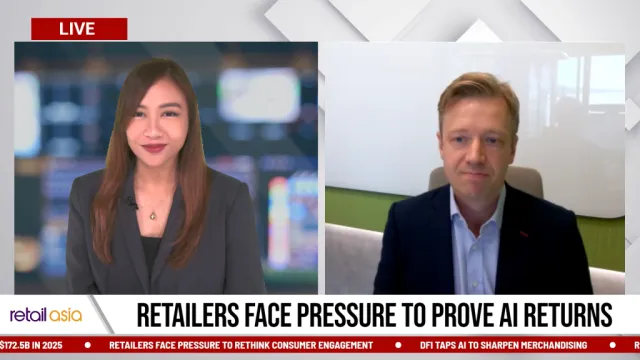
Hear directly from retail leaders on what it takes to move AI from experimentation to business impact.
Watch the full Lark Retail Leaders Luncheon discussion here.





















 Read Here
 Advertise
 Sign Up